
UV Printing Technology for Custom Promotional Merchandise: A Complete Guide
Discover how UV printing technology transforms custom promotional merchandise — what it is, how it works, and when to use it for your brand.

Written by
Dane Santos
Branding & Customisation
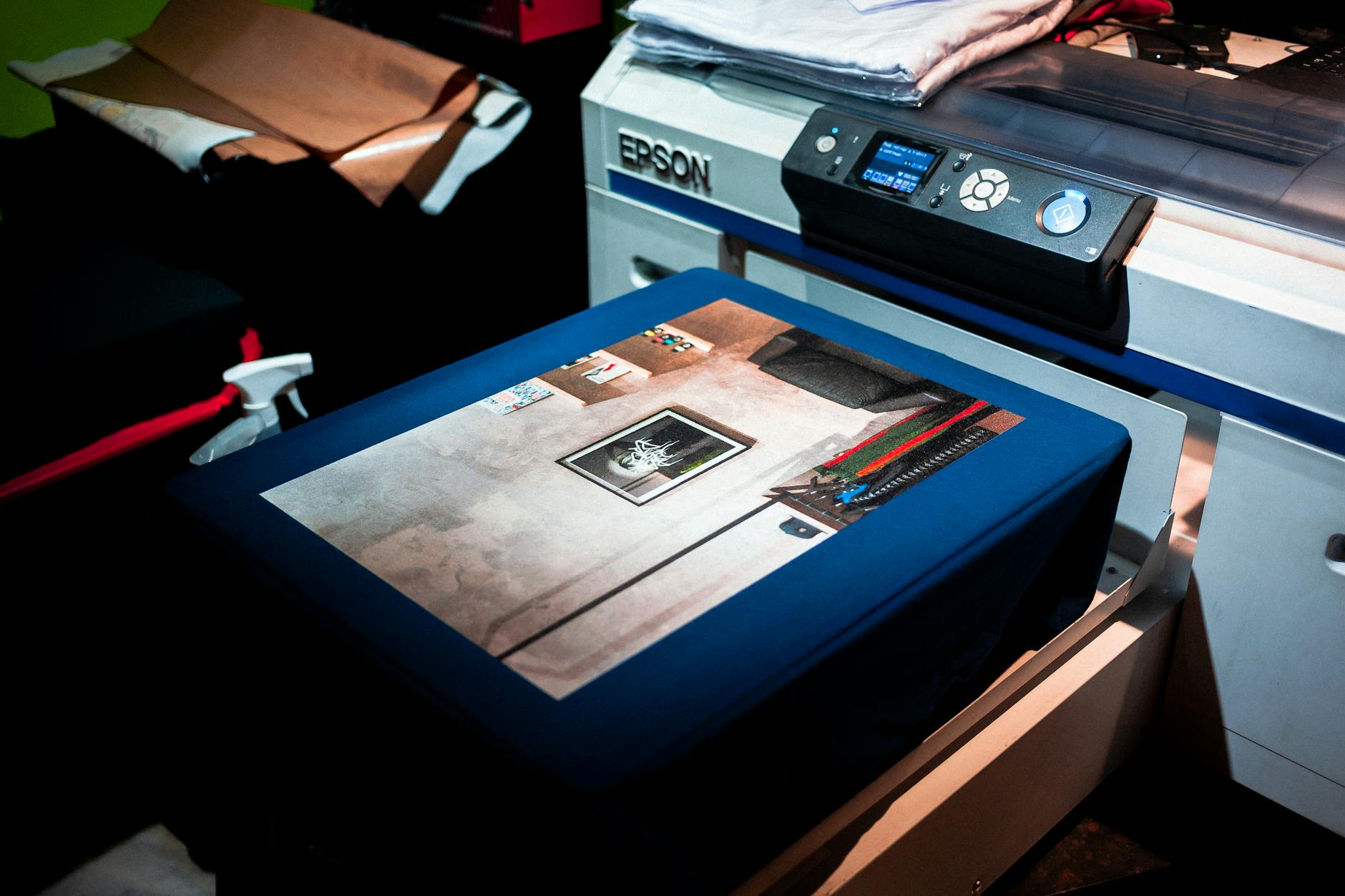
If you’ve ever held a branded product and wondered how a logo ended up looking so sharp, vibrant, and almost three-dimensional on a surface that seems impossible to print on — chances are UV printing technology was involved. This decoration method has quietly become one of the most versatile and exciting options available to Australian businesses, corporate teams, and event organisers seeking to elevate their branded merchandise. Whether you’re sourcing custom giveaways for a Sydney trade show or looking for premium corporate gifts for a Melbourne client base, understanding UV printing can help you make smarter decisions about how your brand gets presented to the world.
What Is UV Printing Technology?
UV printing — short for ultraviolet printing — is a digital printing process that uses ultraviolet light to instantly cure (or dry) ink as it is applied to a surface. Unlike traditional printing methods where ink soaks into a material or requires extended drying time, UV inks are cured almost immediately by UV lamps built directly into the printer. This rapid curing process produces prints that are exceptionally durable, vibrant, and resistant to fading, scratching, and moisture.
The technology was originally developed for industrial applications but has evolved significantly over the past decade. Today, UV printing is accessible for short-run custom merchandise orders and is being adopted widely across the promotional products industry, particularly for items where other decoration methods fall short.
How It Differs From Other Decoration Methods
To appreciate UV printing’s strengths, it helps to understand where it sits alongside other common decoration options. Methods like screen printing for promotional products in Sydney require separate screens for each colour and work best on flat, absorbent surfaces like fabric. Embroidery excels on apparel but can’t replicate fine gradients or photographic detail. Pad printing works on curved surfaces but is typically limited to simple, single-colour designs.
UV printing breaks many of these constraints. It can handle full-colour designs, photographic images, gradients, and intricate detail — all without the need for screens, plates, or extensive setup. It also works on an extraordinarily wide range of surfaces.
What Makes UV Printing Ideal for Promotional Merchandise
The true strength of UV printing technology for custom promotional merchandise lies in its versatility. Where most decoration methods are suited to specific product types, UV printing can be applied to almost any rigid or semi-rigid surface, including:
- Plastic – phone cases, pens, USB drives, rulers
- Metal – awards, tumblers, keyrings, tools
- Wood – wooden plaques, awards, coasters
- Glass – glassware, bottles, jars
- Leather and leatherette – notebooks, wallets, cardholders
- Acrylic and PVC – signage, fridge magnets, display items
- Ceramic – mugs, tiles, promotional drinkware
This breadth of application makes UV printing particularly powerful for organisations that want consistent branding across a diverse range of products. Consider a Brisbane corporate team sourcing merchandise for an end-of-year function — they might want branded mugs, notebooks, and tech accessories all carrying the same crisp logo. UV printing can deliver that visual consistency across multiple product types without compromising quality.
Print Quality and Detail
One of UV printing’s most celebrated qualities is the resolution it achieves. Most UV printers operate at resolutions of 1200 DPI or higher, meaning fine lines, small text, and complex artwork reproduce faithfully. For businesses with detailed logos, multi-colour brand guidelines, or photographic imagery, this matters enormously.
There’s also the option of adding texture effects. UV printing can produce raised, tactile prints — sometimes called 3D or embossed effects — by applying multiple passes of ink before curing. This creates a textured finish that adds a premium feel to items like personalised wooden award shields or high-end unique corporate gifts.
UV Printing Across Key Merchandise Categories
Drinkware and Mugs
Drinkware is one of the most popular categories in branded merchandise, and UV printing has transformed what’s possible here. Traditional methods like pad printing on a ceramic mug often limit you to one or two colours on a small print area. UV printing opens up full-colour, wrap-style decoration with far greater precision.
If you’re exploring wholesale personalised mugs in Australia, UV-printed options are worth considering for premium gifting, where visual impact and perceived quality are priorities.
Tech Accessories and Electronics
Tech merchandise is another category where UV printing shines. Products like custom printed laptop stands and promotional earbuds often feature hard plastic or metal housings that respond well to UV decoration. The result is a branded product that looks considered and professional rather than an afterthought.
Power banks, USB drives, and wireless chargers are also popular candidates — items with flat or slightly curved surfaces that UV printing handles easily.
Novelty and Lifestyle Products
UV printing has also made certain niche product categories far more viable. Magnetic fridge magnets with full-colour photographic imagery, custom stubby holders with intricate designs, and even custom steering wheel covers for driving school branding can all benefit from the flexibility and quality UV printing provides.
For event merchandise, personalised licence plate frames for car dealerships are a prime example of UV printing being used on a hard-wearing product that endures outdoor conditions — exactly where durability matters most.
Bags and Promotional Textiles
While UV printing is primarily suited to rigid surfaces, advances in flexible UV ink formulations mean it can be applied to certain bags and fabric-based products with care. That said, for items like custom tote bags in bulk or sustainable branded bags for corporate social responsibility, screen printing and heat transfer typically remain more practical choices for large runs on flexible substrates.
Practical Considerations for Ordering UV-Printed Products
Minimum Order Quantities
One of the advantages of UV printing over traditional screen printing is its suitability for shorter runs. Because there are no screens or plates to create, setup is faster and less costly, making UV printing economically viable even for smaller orders. Many suppliers offer UV-printed products with minimum order quantities (MOQs) starting as low as 25–50 units, though this varies by product type.
For organisations planning fast-turnaround promotional products, UV printing is also appealing because the curing process is almost instantaneous, reducing production time compared to methods that require extended drying or curing cycles.
Artwork Requirements
UV printing is a digital process, so high-resolution artwork files are essential. Ideally, you’ll supply your logo and design as a vector file (AI, EPS, or PDF) or a high-resolution raster file at 300 DPI or above at print size. Unlike screen printing, you don’t need to separate your artwork into individual colours — the printer handles full-colour output directly.
If your brand uses PMS (Pantone Matching System) colours, discuss colour matching with your supplier. UV printing can achieve close PMS matches, but because it uses CMYK ink mixing, exact PMS replication may vary slightly depending on the printer and substrate.
Durability and Longevity
UV-cured inks bond strongly to the surface material, resulting in prints that resist scratching, peeling, and UV degradation (somewhat ironically given the technology’s name). For promotional items intended for long-term use — such as promotional first aid kits for manufacturing plants or outdoor event merchandise — UV printing offers a durability advantage over many alternatives.
It’s worth noting that on certain surfaces, particularly glass and very smooth metals, adhesion can be affected by heavy handling over time. A gloss or matte overcoat varnish can be applied during the print process to enhance longevity.
Budget Considerations
UV printing typically sits at a mid-to-premium price point compared to pad printing or basic screen printing on simple products. However, the per-unit cost can be competitive when you factor in the elimination of setup fees for colour separations and the ability to print photographic-quality imagery without additional charges per colour.
For businesses tracking industry trends in the promotional merchandise space, understanding where decoration technology is heading — including the growing role of UV printing — is valuable context. Keeping an eye on promotional product industry trends and trade show attendance patterns can help you align your merchandise strategy with where the market is moving.
UV Printing and Sustainable Merchandise
Sustainability is increasingly important for Australian businesses when selecting promotional products. UV printing has some genuine environmental credentials worth knowing. Because inks are cured instantly, there is minimal solvent evaporation, and UV printing typically produces less volatile organic compound (VOC) emissions than solvent-based printing methods.
UV printing also enables decoration on products made from sustainable materials — bamboo, recycled plastics, FSC-certified wood — without compromising quality. If your organisation is committed to organic cotton marketing giveaways or sustainable branded cotton produce bags, UV printing may not always be the right fit for fabric products, but it pairs beautifully with eco-conscious rigid products like bamboo drinkware, recycled resin pens, and timber awards.
When to Choose UV Printing for Your Merchandise
UV printing technology for custom promotional merchandise is the right choice when:
- Your design is full-colour, photographic, or highly detailed
- You’re decorating on a rigid or hard surface that other methods can’t handle
- You need a shorter run without high setup costs
- Premium print quality and durability are priorities
- You want a consistent brand look across multiple product types
It may not be the best choice for large-volume fabric-based items like t-shirts or event lanyards — for those, how to make custom lanyards and traditional apparel decoration guides will point you in a better direction. It’s also worth comparing UV printing against other methods for specific products, as cost and quality trade-offs vary depending on what you’re ordering and in what quantity.
Conclusion
UV printing technology has genuinely expanded what’s possible in the world of custom promotional merchandise. Its ability to deliver vibrant, durable, full-colour decoration across an extraordinary range of surfaces makes it one of the most flexible and impressive tools available to Australian businesses and organisations. Whether you’re creating high-end corporate gifts, branded event merchandise, or distinctive promotional novelties, UV printing deserves serious consideration in your decoration method shortlist.
Here are the key takeaways to keep in mind:
- UV printing uses ultraviolet light to instantly cure ink, producing highly durable, vibrant prints with excellent resistance to fading and scratching
- It works on almost any rigid surface — plastic, metal, wood, glass, ceramic, acrylic, and more — making it ideal for diverse merchandise ranges
- Lower MOQs and faster production make UV printing accessible for shorter runs compared to traditional screen or pad printing
- Full-colour, photographic detail is a strength, making it perfect for complex logos, gradient artwork, and premium-look branded products
- Sustainability credentials are reasonable, with lower VOC emissions and compatibility with eco-friendly product materials
- Always supply high-resolution artwork and discuss PMS colour matching expectations with your supplier before confirming your order